twitter
rss


When students are transitioning, we typically do a Brain Break. These usually last 1-5 minutes.  A wonderful website I have been using with the students this year is http://www.gonoodle.com. There are a variety of videos for me or the students to pick from.  Some are relaxing, some are energizing, some are education, some are just plain silly.  

Lately, the students have really been enjoying KooKooKangaroo! You can find their youtube channel here.  You can also find their website here.  


So why do we do Brain Breaks?


MOVEMENT MATTERS


No spelling words due to the short week.

Click here for the homework packet (This Friday!)

General Homework Tips for Parents 

  • Make sure your child has a quiet, well-lit place to do homework.
    Avoid having your child do homework with the television on or in places with other distractions, such as people coming and going.
  • Make sure the materials your child needs, such as paper, pencils and a dictionary, are available.
    Ask your child if special materials will be needed for some projects and get them in advance.
  • Help your child with time management.
    Establish a set time each day for doing homework. Don't let your child leave homework until just before bedtime. Think about using a weekend morning or afternoon for working on big projects, especially if the project involves getting together with classmates.
  • Be positive about homework.
    Tell your child how important school is. The attitude you express about homework will be the attitude your child acquires.
  • When your child does homework, you do homework.
    Show your child that the skills they are learning are related to things you do as an adult. If your child is reading, you read too. If your child is doing math, balance your checkbook.
  • When your child asks for help, provide guidance, not answers.
    Giving answers means your child will not learn the material. Too much help teaches your child that when the going gets rough, someone will do the work for him or her.
  • When the teacher asks that you play a role in homework, do it.
    Cooperate with the teacher. It shows your child that the school and home are a team. Follow the directions given by the teacher.
  • If homework is meant to be done by your child alone, stay away.
    Too much parent involvement can prevent homework from having some positive effects. Homework is a great way for kids to develop independent, lifelong learning skills.
  • Stay informed.
    Talk with your child's teacher. Make sure you know the purpose of homework and what your child's class rules are.
  • Help your child figure out what is hard homework and what is easy homework.
    Have your child do the hard work first. This will mean he will be most alert when facing the biggest challenges. Easy material will seem to go fast when fatigue begins to set in.
  • Watch your child for signs of failure and frustration.
    Let your child take a short break if she is having trouble keeping her mind on an assignment.
  • Reward progress in homework.
    If your child has been successful in homework completion and is working hard, celebrate that success with a special event (e.g., pizza, a walk, a trip to the park) to reinforce the positive effort.

Click here for the reading log due 4-20-15 (Monday!)


Another poem brought in by a student!  A bit difficult to read with that beautiful pink gel ink, so I typed what is written!

There is a thing under the string, it is called the zing, it is a winged ink. It slimes around and tells the future!


There is something you should be scared of, it is in a box that got delivered to me- a cube kitten. From Grandma and Grandpa

Share one sentence from your letter to Jaime.  Then comment on another student's sentence.  


Students: Read the poem at home with your family!  Have them sign it, and/or write a note.  Bring your poetry journal back tomorrow!


This student wrote a poem about folding paper-and then folded the paper!  Very creative! Keep writing those poems!!!


One student went home very excited last night and came back to school this poem:

Writing Station
In the class there's a 
thing called the station,
But not just any station
it's a writing station,
No one cleans it,
All night and day it's messy,
Like writing a messy poem.  

I translated for the spelling. This particular student has excellent handwriting, but purposely made it look bad to match the writing station (she also tends to be the one who cleans up the writing station!) 

Keep writing and reading poems!  Bring them in to share with the class!

Which book was your favorite?  Don't forget to show evidence! 


Every Wednesday, the students study a poem, practice writing it, and take it home to read to their parents.  I have gotten a lot of feedback from parents over the years.  Many say they still have the poetry journal and it brings back wonderful memories.  I plan to incorporate more poems within lessons, in the month of April.  


What will you do to celebrate Poetry Month?


I personally like WordMover.  I love those little magnetic words and creating playful poems.  


Maria Shriver is currently challenging us to write a poem a day for April.  Time to start writing!

What the Teacher Wants!: Favorite Freebies:

Families, although this site is mainly for teachers, there are some awesome things YOU can download for your kiddos at home if they are getting rambunctious!


"Purple Mountain Majesty" by Jason DeMarte is part of RedLine's “Playing with Beauty” exhibition
(Photo: Courtesy of RULE Gallery)

A large-scale dragon model from 'Mythic Creatures'
(Photo: Courtesy of the American Museum of Natural History


Dora Moore just finished the PARCC testing (although I think there may be more coming up...)  I really enjoyed reading this from another blog.  Even though I teach 1st grade, testing effects us all.  This is a good article for every teach to read.  There are snippets I can use for my first graders.  


For details, click here.   and here

When Dora Moore teachers were first told they would be serving breakfast in the classroom....well...they (myself included) kind of freaked out. One reason we were concerned was loss of instructional time.  We were also concerned about little critters. DPS is currently serving Breakfast After the Bell to 87 schools.  

The Good
It was a learning experience in the beginning, and everyday brings about a new challenge.  I am grateful for the program, because I am not hearing "I'm hungry", like I used to before this program.  I do have a few complaints, and they have been heard.  Also, I rarely have students falling asleep in class!  This is a huge plus! I do not have data on the effects it has made in academic achievement.  But working in an urban school and knowing my students have food in their belly is comforting.  

The Bad and The Ugly
One day, I decided to count the grams of sugar that the students were taking into their bodies. IF, a child that particular day had breakfast with juice and/or sugar coated raisins and school lunch with chocolate milk, a frozen dessert and fresh fruit (not including afternoon snack and what happens at home), their total sugar intake for the day would have been over 100g (25 teaspoons)! By the end of the day, I was exhausted and many of the students were a bit cranky.  But let me be clear, this DOES NOT happen daily!  The students are served a variety of foods for breakfast through the week. And I am grateful for the Kaiser programs that have come in to teach DPS children the importance of nutrition, exercise, water intake and media time.   

So what does sugar do to your child's body?


More Good
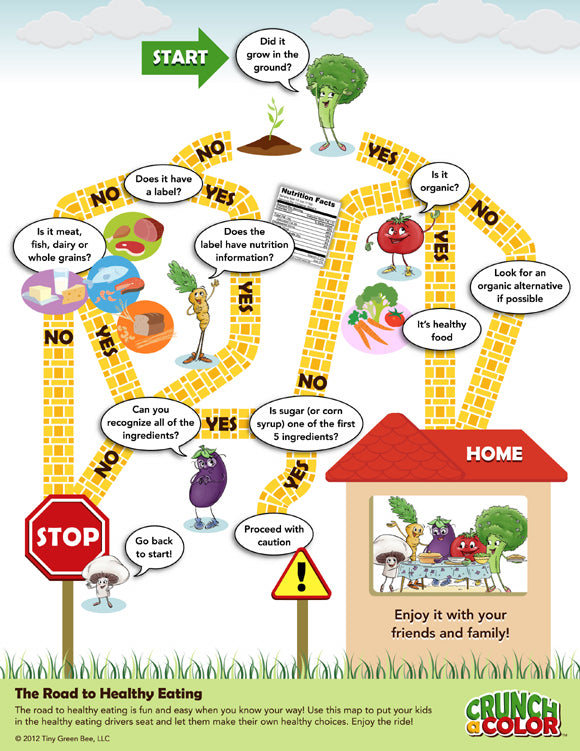
So...families...please help ME, educate your CHILD on making HEALTHY CHOICES. 


The Road to Healthy Eating
Courtesy of: Crunchacolor.com


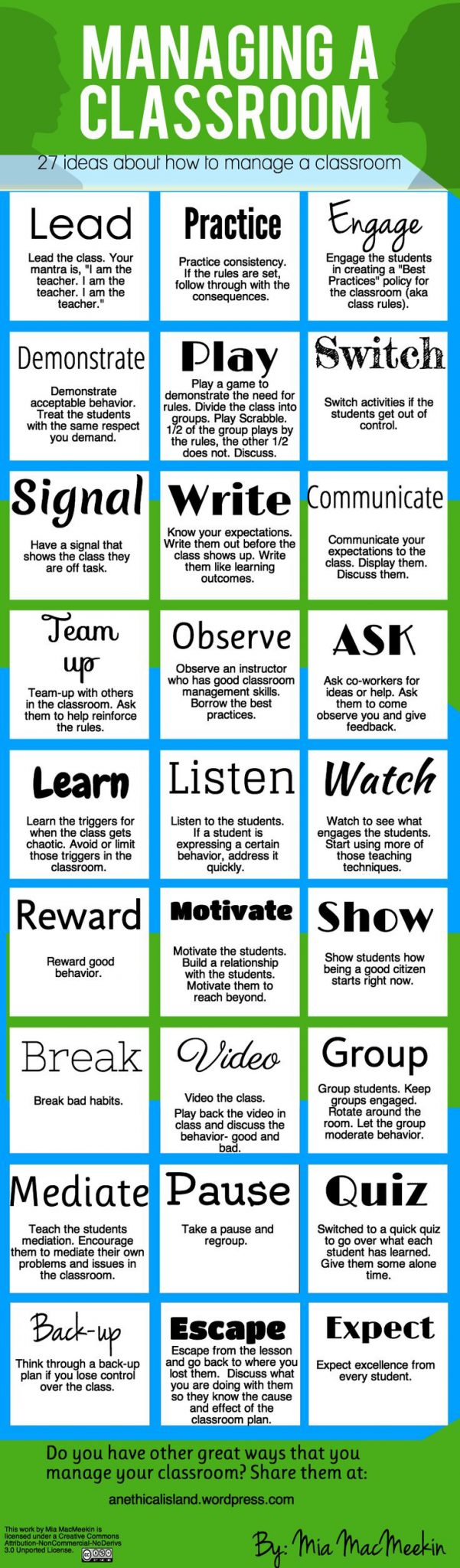
Sometimes, managing a classroom of 24 six and seven year old students is a lot like herding cats.  


But over the past 10 years, I have learned a few tricks.  Some tricks will work on year, and then the next they don't.  So I always try to be flexible, patient and understanding.  I found this infographic (below) and it has a lot of the practices I use in my classroom.  I do not teach the students to meditate.  But I do teach them many breathing exercises.  

This year, I introduced the Relaxation Station.  Students can ask to go- during independent time. Or, if I know a student needs it, I will send them there.  In the Relaxation Station, I have Play-doh, squishy balls, stretch bands, fabrics with different textures, etc.  This year, it is proving to be very helpful for my students.  

The last item on the infographic is Expect. My expectations are held high for every student, and they all know that.  


Each month, 1st graders get a chance to read with 6th graders.  This month, 1st graders got to see a 6th grade classroom and ask questions before reading!  They learned a lot about International Town (a recent field trip for the older students).  


A slide show of our trip!  Families, please send any pictures you would like posted on the blog!


Today we wrote a friendly letter to Claire.  Please share one sentence from your letter.  Then you can give feedback on someone's comment. 


Not sure what to do with your child over spring break?  Check out these sites for some ideas!  Take pictures!  I will be sure to post them on this blog!

http://www.tipjunkie.com/post/activities-for-children/

https://www.pinterest.com/grkids/spring-break-activities/

http://fun.familyeducation.com/activities/vacations/48557.html

http://childparenting.about.com/od/funcelebrations/tp/spring_break_activities.htm

http://stayathomemoms.about.com/od/activitiesandfun/tp/Spring-Break-Fun.htm

http://www.signupgenius.com/home/50-inexpensive-and-fun-spring-break-activities.cfm